
BallotWise
Product
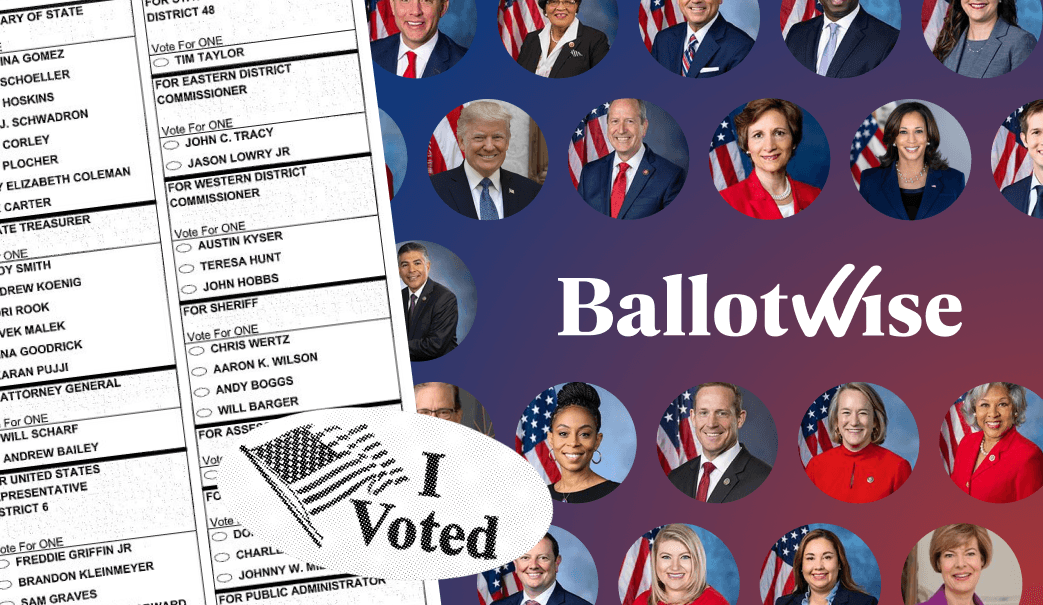
Visual Design & Brand Identity for BallotWise, a new nonpartisan tool aimed at helping undecided and non-politically engaged voters learn more about the candidates on their ballot and their stance on key issues, empowering them to make informed decisions before Election Day.
A project created by students from:

Featured in:

About BallotWise
BallotWise shows undecided voters a preview of their actual ballot, then breaks down each candidate’s real, tangible actions in Congress instead of just their talking points: plain-English summaries of real bills paired with how they actually voted. We picked the bills using the ten issues the New York Times/Siena poll found voters cared about most in the 2024 cycle.
That’s the whole point: showing a candidate’s actions, not just their promises. We built it with young and lower-income voters in swing states in mind, since they’re the ones least likely to have time to dig through voting records themselves, so they can walk into the booth with an actual plan.


How it Works
You enter your zip code, no account needed, and we pull your specific races and candidates from the Google Civics API.
You get a preview of your actual ballot and can browse each candidate to see how they voted on real congressional bills tied to the biggest issues of the 2024 cycle. Each bill gets a nonpartisan summary, drafted by GPT-4o and checked by a policy expert, of what it actually would have done.
You pick who you’re voting for, and BallotWise builds you a personalized voting guide to bring into the booth.
Crafting a Visual Identity
For the visual identity, I was chasing a specific balance: something trustworthy enough for a civic tool but still approachable, not another sterile government-adjacent website.
Colors for Nonpartisanship
Color was the first real decision. I built a gradient that moves from red to blue and meets in a neutral middle, a literal picture of BallotWise not leaning either direction. Everything sits on plain white, which keeps the palette from feeling gimmicky and matches the transparency the platform is actually built around.


A Typeface for Credibility
For the logo and supporting materials, I went with Geller, a serif that reads the way newspapers and government documents read: established, credible, a little formal. I paired it with Area, a plainer sans-serif, for everything else, so the brand didn’t feel stuck in the past alongside all that gravitas.

Adding Humanity and Personality
The one place I let myself get playful was the W in the wordmark, built from two hand-drawn checkmarks. It’s a small nod to voting, and the slightly imperfect linework keeps the whole thing from reading as another sterile civic-tech product. Voting is personal; the logo should look like it knows that.

Process and Evolution
This took a few rounds to land. My first pass leaned hard on modern sans-serif type, and it read as clinical instead of empowering, so I went back to the serif to anchor things in trust. The checkmark W came later, after I realized the logo needed more personality and a symbol people would recognize instantly without being too on the nose.
Put together, the serif type, the hand-drawn checkmark, and the neutral color scheme all point at the same thing: BallotWise is here to inform, not to sway anyone. That was the brief from day one, and I wanted the brand to make the case before a user ever reads a word of copy.


